
Your property brief
Energy and Renewable Technologies
Rising consumption, ageing equipment, a reporting requirement or a proposed investment can prompt an energy review. Establish the objective first: lower demand, a defined carbon action, new generation or better information. Different objectives need different evidence and should not be bundled into an unsupported savings promise.
Discuss this service
What the service can include
The offering includes audits, optimisation, metering, procurement support, carbon planning, EPCs, DECs and ESOS support, together with solar, storage, heat pumps, EV charging, LED upgrades, power-factor correction and renewable maintenance. Each instruction identifies the assessment, specialist interfaces and project work included.
We provide every service in our catalogue, including the individual services within each trade, for all sectors and locations listed on this website. Tell us what your property needs so we can agree the work, access and timing.
What to consider
Measurement, certification, procurement and installation are different activities. A certificate does not replace an energy-management plan, and new equipment does not automatically deliver a quoted saving. Define the baseline, assumptions, authority and method for assessing results before investment.

A closer look at the property brief.
The work starts with the property.Before we visit
Provide the property use, bills, equipment and ownership boundaries. Identify tenant-controlled services and permissions for physical changes. Agree what the owner can implement and which actions need wider cooperation.
How we help
We establish the objective and available evidence, then define the assessment or project scope. Options are considered against operating requirements and practical constraints. Handover records the selected work, responsibilities and information needed to review results.
What affects cost and timing
Data quality, site complexity, equipment, access and specialist requirements affect cost. Ongoing licences, maintenance and operating charges should be considered alongside installation. Compare the complete arrangement using consistent assumptions.
Property and sector applications
Managing agents need responsibilities and approvals connected to the correct owner. Residential blocks need communal and individual areas distinguished. Retail and hospitality need work coordinated with customers and occupiers. Our complete service and project offering supports all sectors, with scope suited to the property and the people using it.
Local coverage
We cover Northumberland, Tyne and Wear, County Durham and Tees Valley, including Berwick-upon-Tweed, Alnwick, Morpeth, Hexham, Newcastle, Gateshead, Sunderland, Durham, Darlington, Hartlepool, Stockton-on-Tees and Middlesbrough. View all locations.
For several properties, provide separate access and occupancy information. A remote owner can nominate a local representative while retaining a clear route for approving the work.
Frequently asked questions
Should new technology be the first step?
Not always. Understanding demand, controls and existing condition can identify the appropriate starting point.
Can savings be guaranteed from a product specification?
No. Actual results depend on the building, use and commercial conditions.
Can one enquiry cover assessment and installation?
Yes. Keep the assessment, design and delivery stages defined so decisions are based on the evidence found.
Can an owner improve tenant-controlled services?
Agree authority, data access and the scope of cooperation before committing to work.
Knowledge and guidance
Read planning an energy improvement project and building management systems explained. Official guidance provides the relevant context for this service. Browse the Knowledge Centre.
Related services and your next step
Explore the services in this family: Battery Storage, Solar PV, Heat Pumps, Electric Vehicle Charging, Renewable Energy Maintenance, Energy Audits and Management, Building Energy Optimisation, Carbon and Net-Zero Planning, Energy Procurement, Metering and Monitoring, Display Energy Certificates, EPCs and Energy Performance Assessments, ESOS Assessments, LED Lighting Upgrades, Power-Factor Correction, Sub-Metering. See maintenance, Minor Works, the full services and projects directories.
Contact Black & White Property Services with the address, requirement and relevant property information. Include the owner or manager responsible for access and decisions so the proposal covers the complete job.
Explore this service area
16 pages

A proposed solar installation, changing demand or a requirement to shift electricity use can justify a storage assessment. Establish what the battery should do and when. Energy capacity, power output and backup capability are different specifications, so a single quoted capacity does not describe the complete solution.

Equipment running outside occupied hours, conflicting heating and cooling or unexplained baseload can justify an optimisation review. Establish the service conditions the building needs. Reducing consumption should not mean removing necessary ventilation, comfort or process provision.

A reporting requirement, estate strategy or investment decision can prompt carbon planning. Establish which organisation, properties and activities are included. A plan without a defined baseline cannot show what changes or whether progress is being measured consistently.

A public-building requirement, renewal or missing certificate can prompt a DEC enquiry. Establish occupancy, use and the relevant building boundary. A DEC is based on operational energy use and is different from an EPC's assessment of the building's energy performance.

Staff demand, fleet changes or a property improvement can prompt an EV charging assessment. Establish dwell times and charging needs before choosing power ratings. The fastest available unit may not be the right choice for a vehicle parked throughout the working day.

Rising consumption, unclear baseload or a planned investment can justify an audit. Establish the buildings, activities and reporting period. A bill increase can reflect price as well as usage, so separate the two before deciding what technical change is needed.

A renewal, new supply or changing consumption can require procurement support. Establish contract dates, notice requirements and the actual supply points. A low unit price can be misleading if other charges or contractual conditions are not compared.

Construction, sale, letting or a planned improvement can require an EPC or assessment. Identify the property and purpose before commissioning the work. A general energy audit and a statutory certificate are different outputs, with different methods and competence requirements.

A qualification review, reporting phase or incomplete evidence can require ESOS support. Establish the organisation and group structure before deciding the assessment scope. ESOS is an organisational scheme and should not be treated as a certificate for one building.

Heating replacement, decarbonisation planning or changed use can justify a heat-pump assessment. Establish the building's heat requirement and how it is distributed. Replacing the heat source without checking emitters, controls and electrical capacity can leave the system poorly matched.

Deteriorating fittings, difficult maintenance or changing room use can justify an LED upgrade. Establish the required illumination and visual conditions. Replacing every lamp by nominal wattage can miss glare, distribution and control issues.
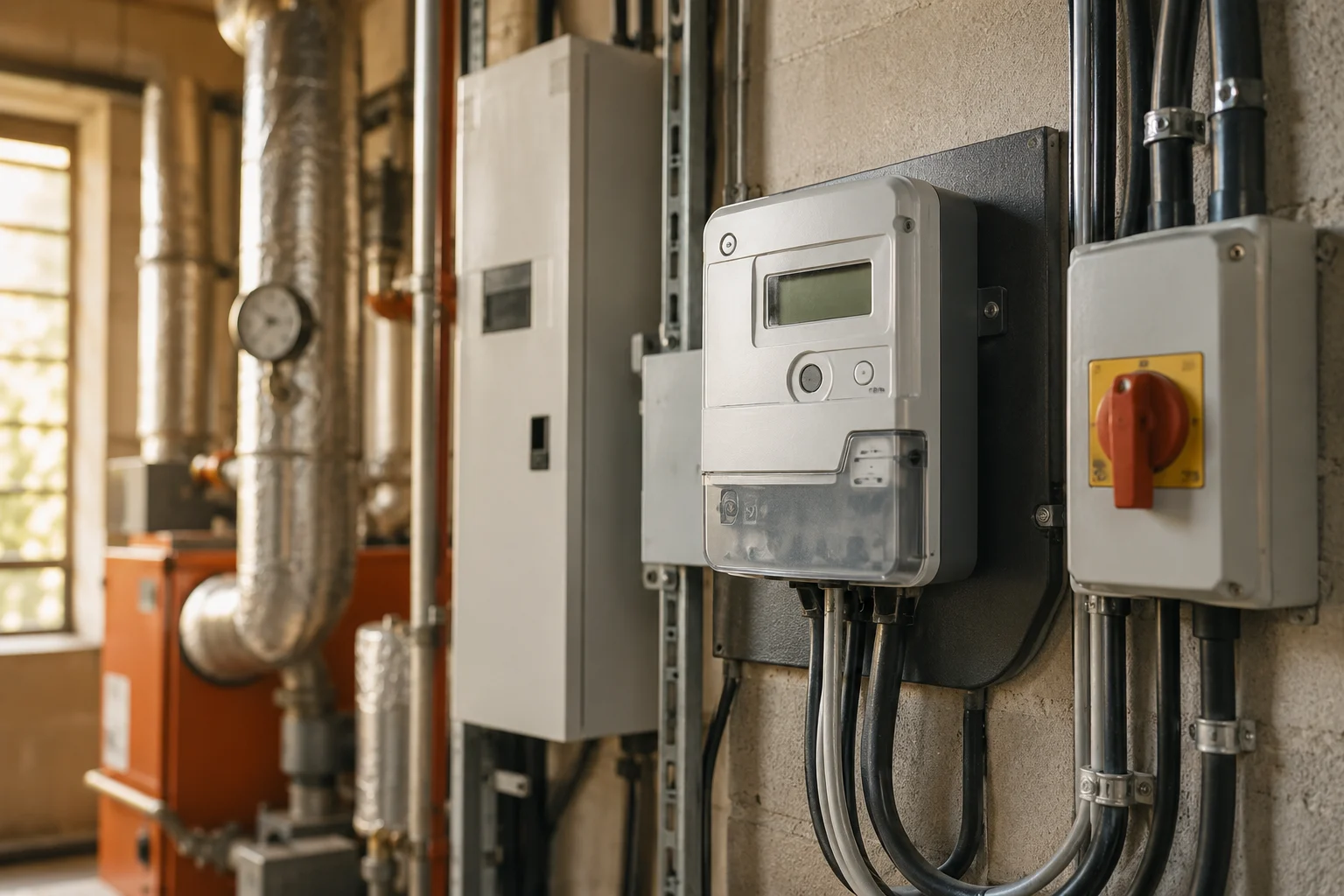
Unexplained usage, estimated data or limited visibility of major loads can justify a review. Establish the question before selecting meters. Whole-building consumption may identify a pattern but cannot always explain which system caused it.

Relevant billing charges, poor power factor or changed electrical loads can justify investigation. Establish the actual measurements and tariff basis. Power-factor correction is not a universal energy-saving device and should not be sold from the electricity bill total alone.

Missing service records, alarms or an unexplained change in output can justify maintenance or investigation. Identify the equipment and compare observations with normal operating conditions. Lower generation on one day does not by itself prove an equipment fault.

A suitable roof or estate energy plan can prompt a PV assessment. Establish demand and the intended use of generation before sizing an array. Available roof area is only one factor alongside condition, orientation, shading and electrical constraints.
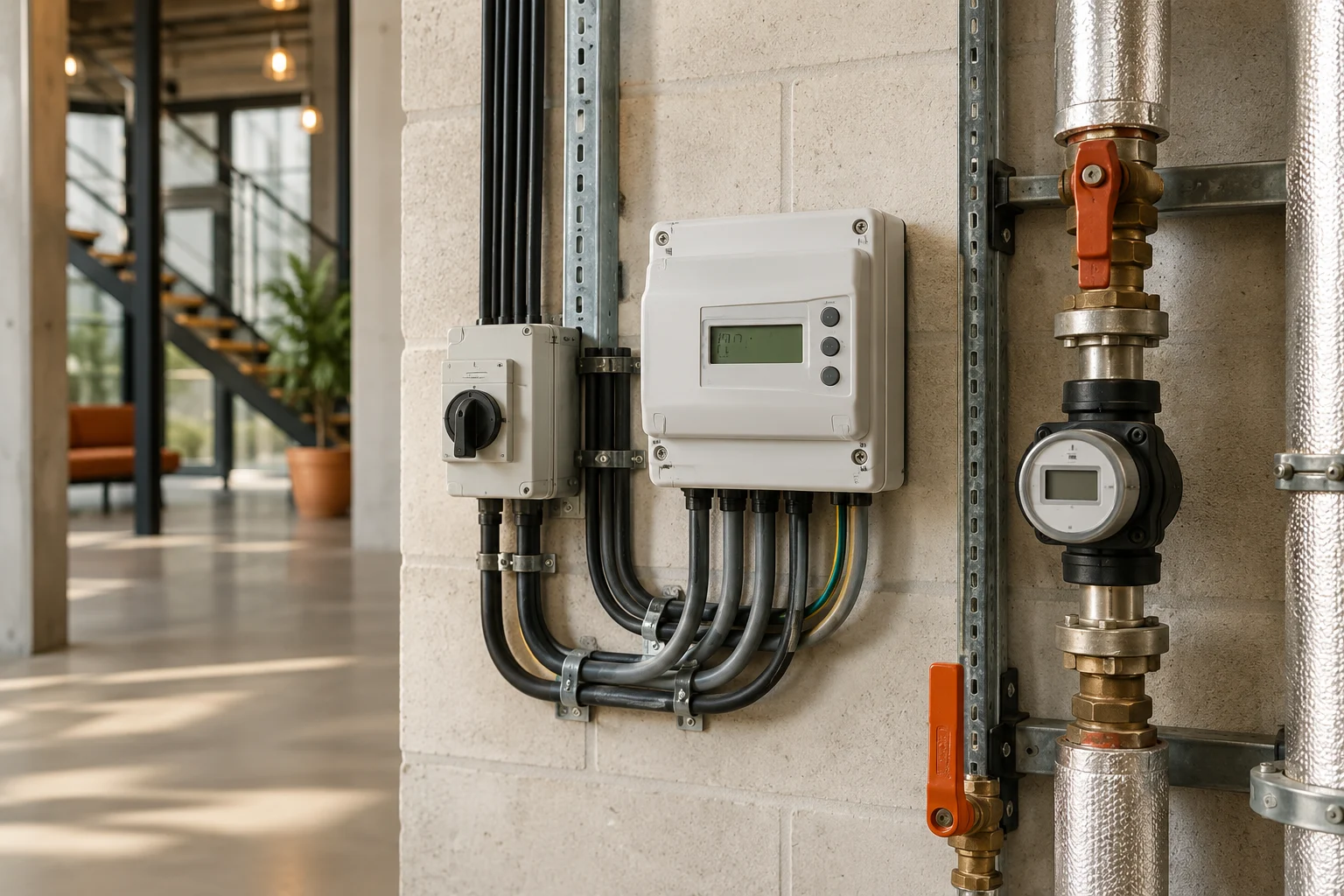
A whole-building bill may not explain a high baseload or differences between areas. Sub-metering can support investigation where the measured boundary is clear. Decide what question the new meter should answer before choosing its position.