
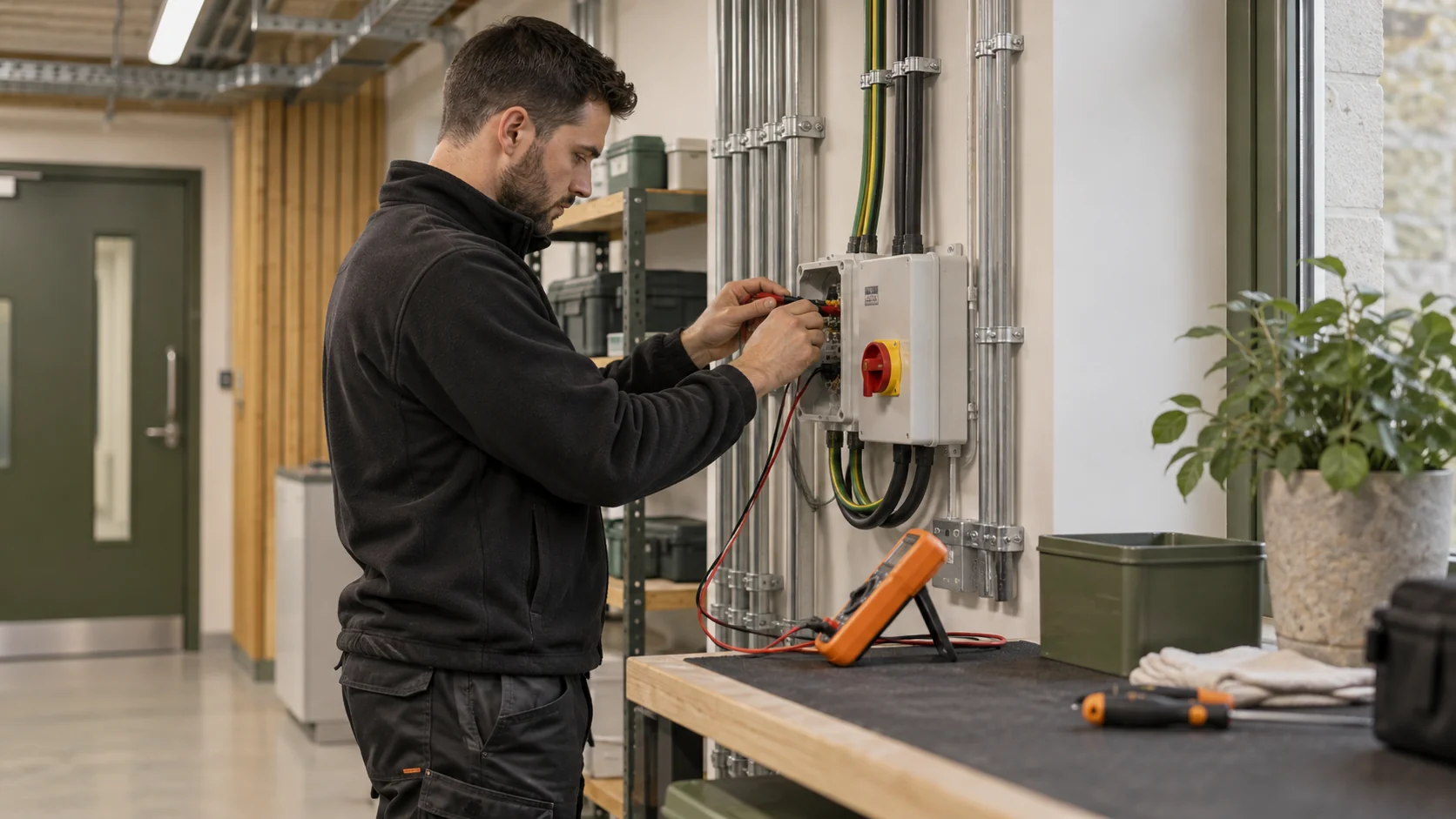
Tell the inspector about generators, uninterruptible power supplies, solar installations and other specialist equipment. These can affect how supplies are isolated. Unless expressly included, a general property inspection should not be assumed to cover every specialist system or the internal components of connected machinery.
An appliance test and an inspection of fixed wiring have different purposes. Neither an appliance test assesses the whole installation nor a fixed-wiring report replaces the arrangements for appliance maintenance.
Why access and shutdown planning matter
The inspector must be able to reach the electrical equipment and relevant rooms and obtain circuit details. Booking a time alone is insufficient. Some inspection and testing needs power disconnected, so prepare the property and its occupants for interruptions.
Put the following in place ahead of attendance:
- Find past reports, circuit lists and certificates covering changes.
- Flag equipment that must be shut down and restarted in a controlled way.
- Organise entry permission, keys and any required escort.
- Tell users who will be affected and settle the interruption sequence.
- Choose someone with authority to deal with urgent observations.
For an office, arrange any IT shutdown with those responsible. A shop needs its trading and security requirements considered too. Landlords must resolve entry to occupied units separately from access to the shared parts of the property.
What should the result tell you?
Look for a report that states what was examined, what was observed, the test information, the overall assessment and any limits. Circuit identification needs to be understandable so you can locate a reported problem without relying on an unexplained number.
Ask which findings require corrective work, which call for more investigation and which are suggested improvements, including how urgently they need attention. Keep evidence of completed repairs with the report it answers so the property records show what has been resolved.
If a room or item could not be accessed, agree how to complete the outstanding assessment. An exclusion records an inspection boundary; it does not establish that the excluded part is safe.
Frequently asked questions
Are fixed wire testing and an EICR the same thing?
They are related, but not interchangeable descriptions. Inspection and testing of the wiring is the activity; where an EICR was commissioned, that document records the resulting condition assessment. Check the quotation for both the work covered and the report supplied.
Can testing take place while the business stays open?
That depends on the programme agreed for the property. Work may be staged, but any necessary isolation still interrupts supply. Identify the rooms and equipment affected before choosing a suitable time.
Does testing find every concealed defect?
No assumption should extend beyond the report’s stated coverage and limitations. Review inaccessible areas carefully, raise concerns about anything excluded and arrange the further assessment appropriate to those concerns.
Further reading and support
For competent inspection and testing information, consult the HSE electrical safety FAQs; our guide explains what an EICR is.
Find help through electrical testing or electrical installations, with routes for compliance remedial works and managing agent support. Browse the complete services, maintenance, projects, sectors and locations listings, or contact us about the property.