If one connection appears hotter than similar ones, its load still needs considering before conclusions are drawn. Ask for an explanation and recommended investigation rather than treating the image as proof that replacement is needed.
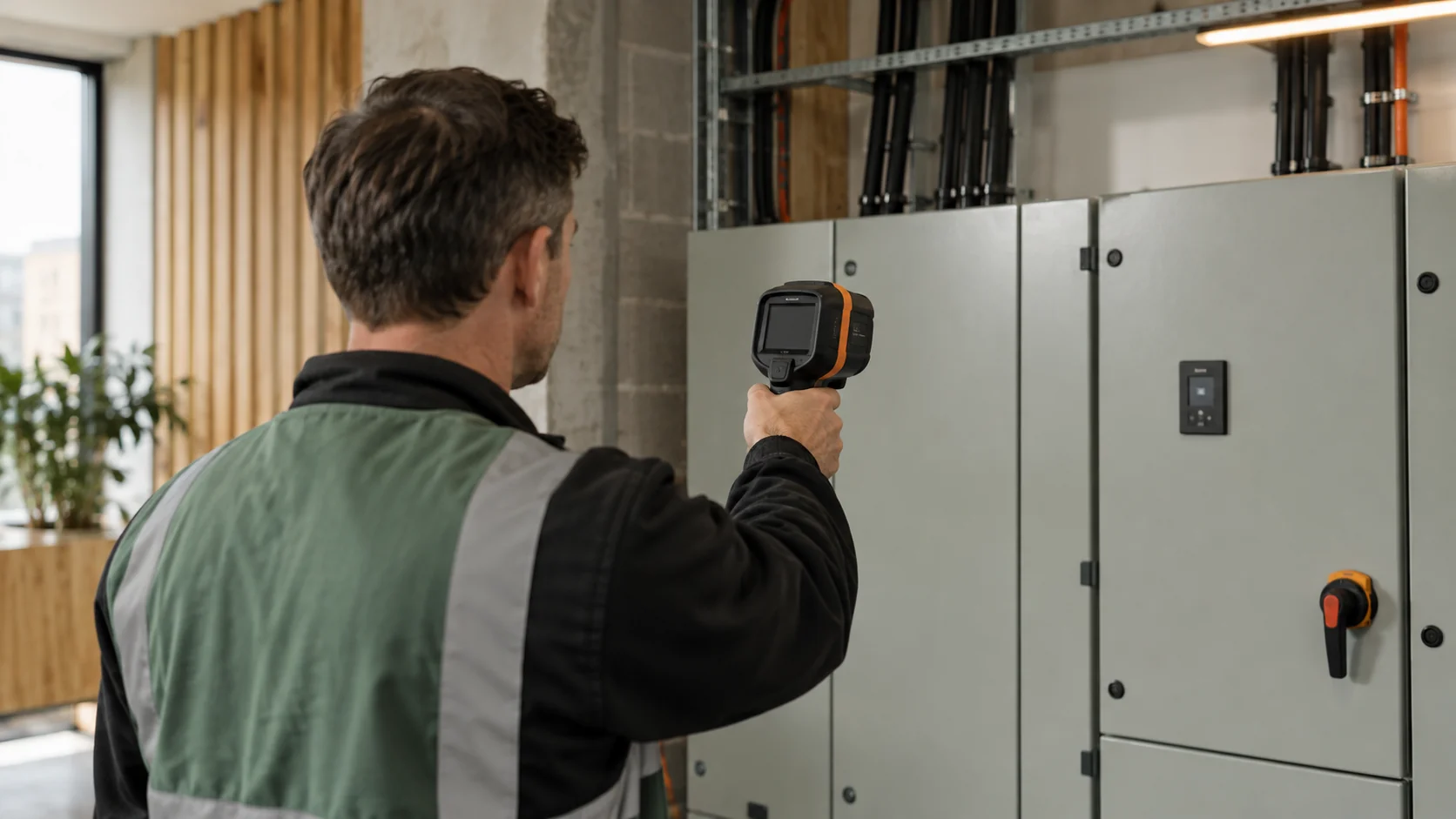
A camera cannot see through solid cabinet metal, as Fluke explains. What can be inspected depends on safe access, viewing position and exposed surfaces. Reflections and surface behaviour affect interpretation. Anything that cannot be viewed should be recorded as uninspected, not passed.
Prepare for a useful survey
Send an equipment list, earlier reports, circuit details and normal operating times. Explain whether you want to investigate a fault, establish a starting record or support routine property maintenance.
Agree what will be running and how its load will be recorded. A quiet period may not reveal conditions present when the fault occurs. Intermittent equipment and production patterns can therefore affect the right appointment time.
Have competent people arrange access. Opening electrical equipment can expose hazards, so do not remove covers for the camera operator. HSE's electrical-safety guidance explains the need to control these risks.
Turn images into actions
The report should identify equipment, include thermal images and useful matching photographs, and explain operating conditions, observations and next steps. It should separate urgent matters from planned investigation and state what could not be assessed.
Give each recommendation an owner and save the investigation outcome. If a connection is repaired, a later image under suitable conditions can help assess the result. Keep that repair record with the original finding so the history remains clear.
Frequently asked questions
Does thermal imaging replace an EICR?
No. It shows temperature patterns under the conditions of the visit. An EICR examines and tests the installation differently. They may complement each other, but one does not replace the other.
Does a hot spot prove a loose connection?
No. Load, ventilation, the component itself and other circumstances affect temperature. Investigate before deciding what to repair.
Can a survey find every electrical defect?
No. Some defects show no temperature difference, and low loads or inaccessible parts limit visibility. Check the report's stated coverage and conditions.
Related help
Find electrical thermal surveys, fault investigation and scheduled maintenance, or read more in the Knowledge Centre.