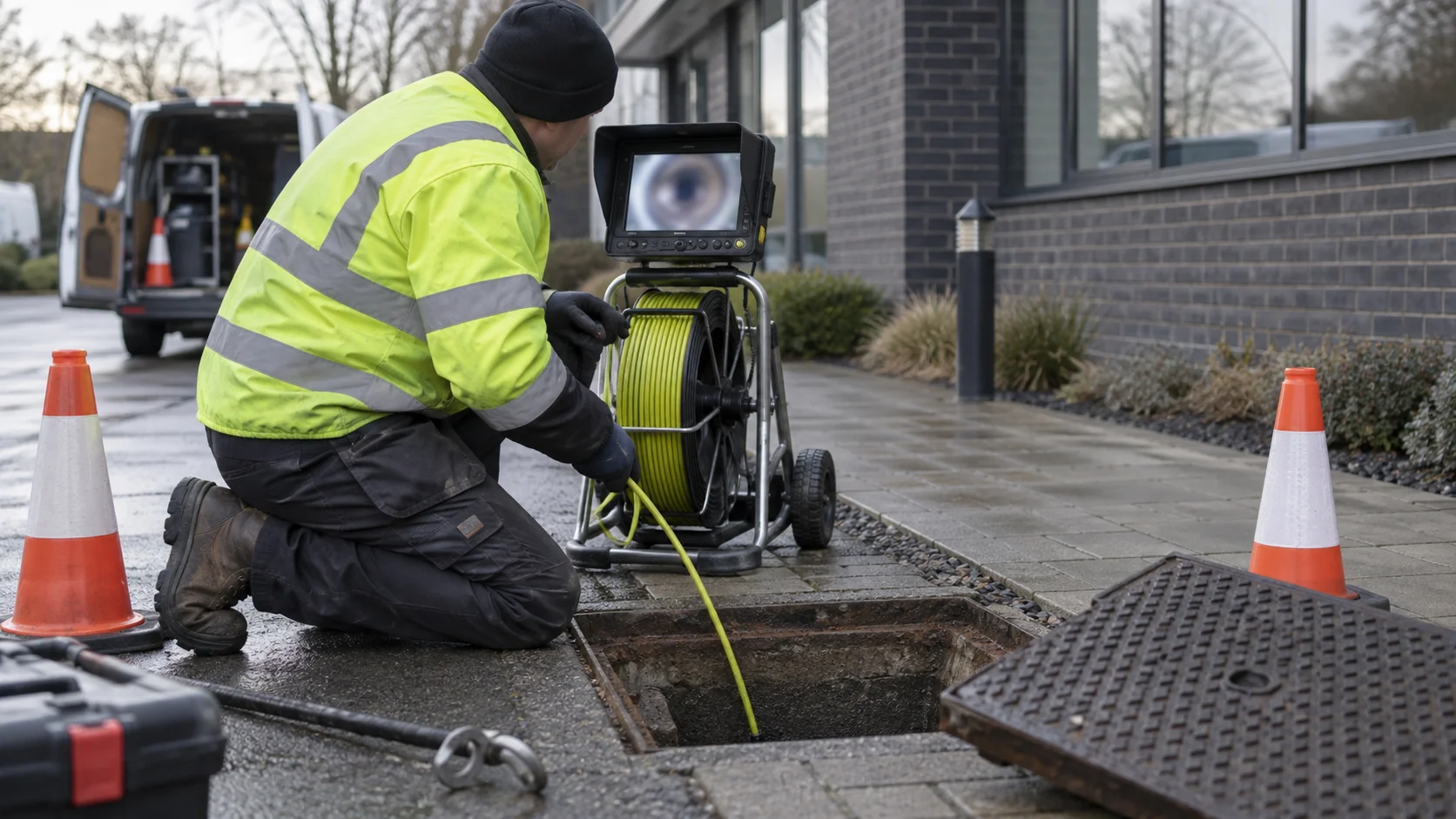
WRc describes CCTV inspection as a tool for structural condition and operational serviceability. Explain whether you need maintenance, repairs or project information, and provide earlier plans and reports so the quotation covers the right output.
Prepare the drain and access
The camera needs a clear enough view and a usable path. Deposits, water and blockages can stop or obscure it. Ask whether cleaning is needed first and agree that work and its cost explicitly.
Arrange access to chambers and any shared land. Explain traffic, people using the area and unusual substances in the drainage. Do not enter a chamber or try to lift an awkward cover yourself.
Read the findings in context
Ask the report to name the run, direction and extent inspected, including where the camera stopped and why. A recording without references can be difficult to connect to the correct repair location.
Distinguish damaged pipework from deposits or flow restrictions. Roots may hide the pipe behind them, needing removal and another look. An obstruction also prevents conclusions about the section beyond it.
CCTV does not automatically inspect the surrounding ground or prove every joint watertight. If you need those questions answered, agree the appropriate additional investigation rather than assuming the camera has done so.
Turn evidence into an action plan
Ask how each recommendation relates to what was seen. The answer may be cleaning, a local repair, assessment for lining or replacement, or further access. Keep the proposed job tied to the evidence.
After repairs, save the completion record with the survey. It gives the next owner or contractor a useful account of what was found, where and how it was addressed.
Frequently asked questions
Can a survey be completed through a blocked drain?
A blockage can prevent travel or hide the pipe. Agree preparation with the contractor and make sure any section left unexamined is recorded.
Does visible damage mean the whole drain needs replacing?
Not automatically. The extent of damage, surrounding condition and access constraints determine the options. A local repair may be suitable where the evidence supports it.
What should I receive after the survey?
Agree the footage, written findings, location references and recommendations before the visit. The report should make clear what was inspected and what could not be checked.
Related guidance and services
Read recurring drain blockages and when a drain can be relined, then see CCTV Drain Surveys and Drain Repairs and Relining for survey and repair routes.
Browse services, maintenance, projects, sectors, locations and the knowledge centre. To discuss a survey, describe the property and purpose of the inspection.