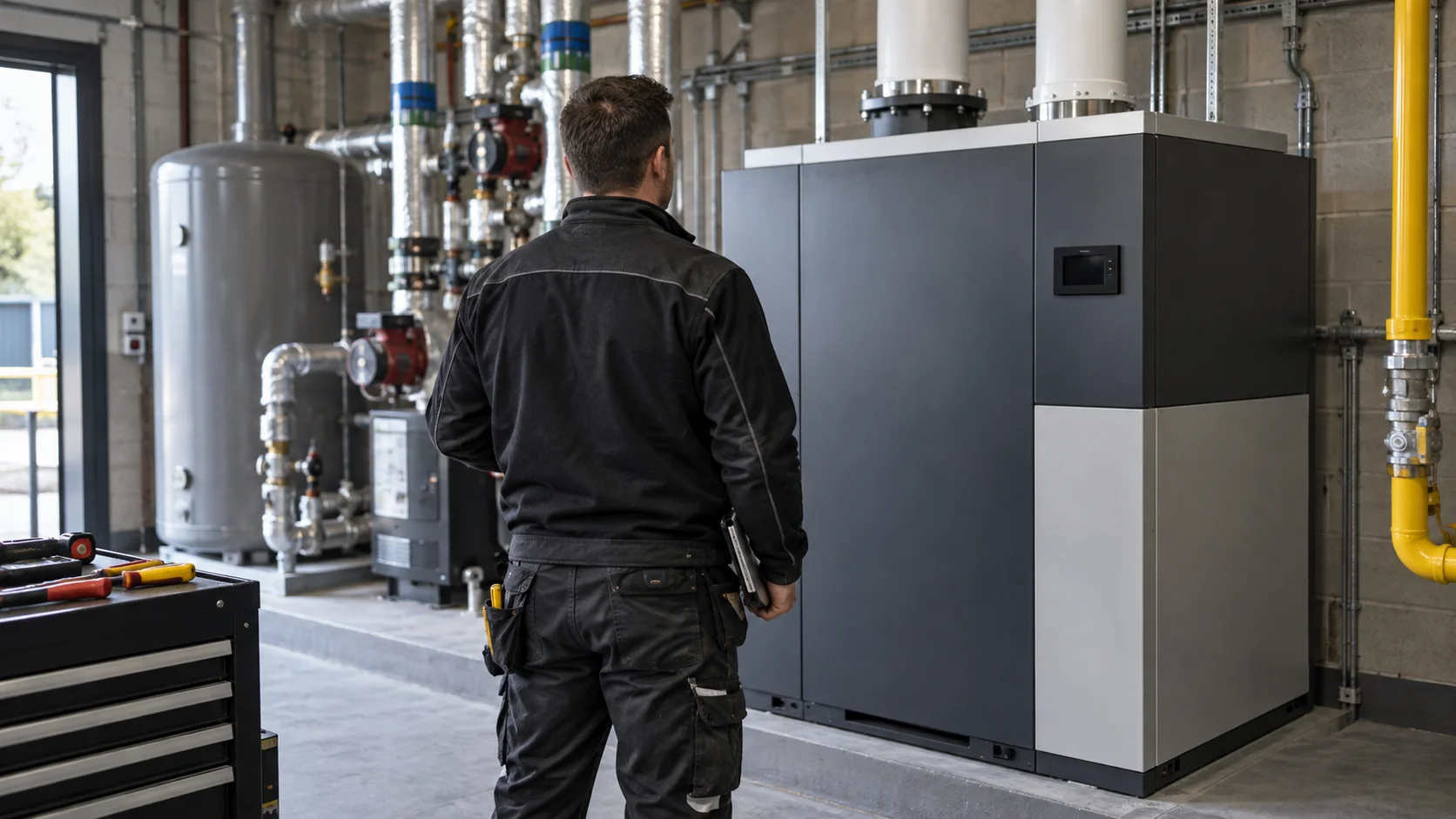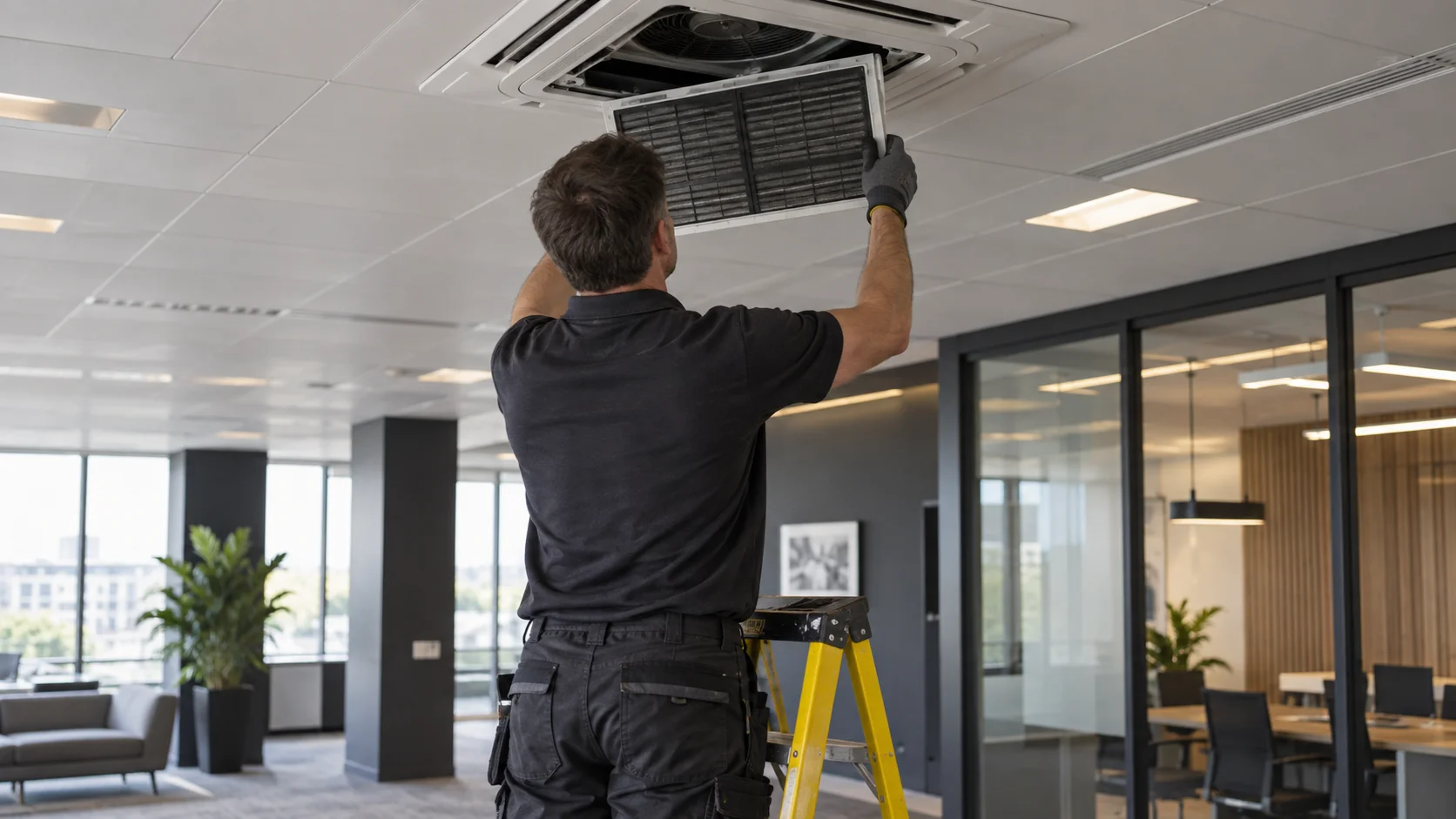
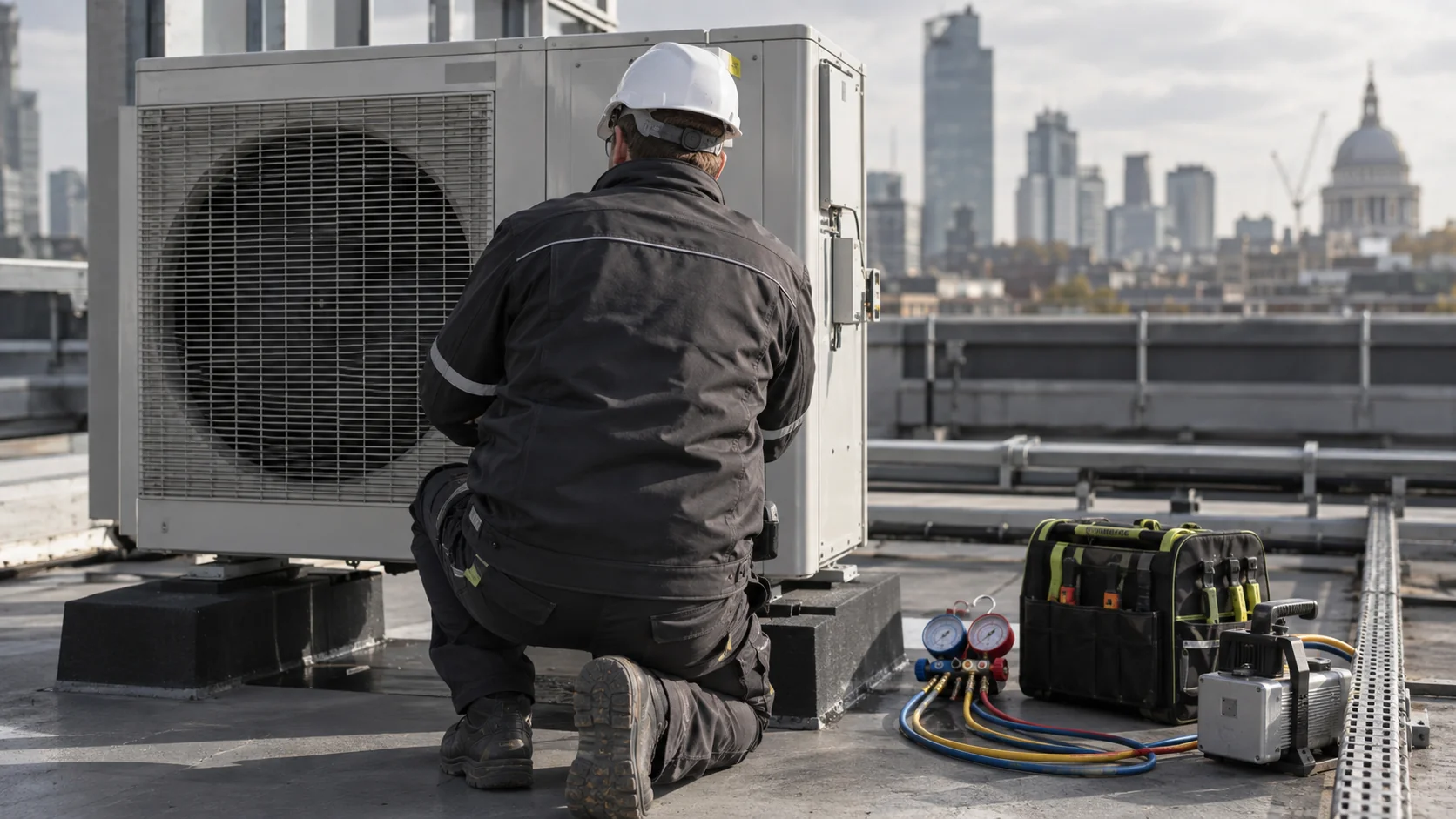
The scope here is relevant stationary cooling and heat-pump equipment in Great Britain. Different categories can have different provisions. Use the actual system and refrigerant information to find out which requirements apply.
Establish the leak-check requirement
The refrigerant’s mass and global warming potential determine its carbon-dioxide equivalent. A cooling-capacity figure in kilowatts is not a substitute and does not tell you when leak checks are required.
Check GOV.UK's leak-check guidance against the system’s carbon-dioxide equivalent, hermetically sealed status and any automatic leak detection. Keep a record of the resulting interval and why it applies. Find missing charge information rather than guessing a date for every unit.
Separate the tasks and records
Ask reports to distinguish general servicing, mandatory leak checks, leak repairs and confirmation that a repair worked. These may share a visit but are different tasks.
Where checking finds a leak, GOV.UK requires repair as soon as possible and a repeat check within a month to confirm success. Arrange the follow-up when approving repair. Simply adding refrigerant does not explain why it escaped.
For equipment in the specified record-keeping scope, keep the required records for five years. Link the refrigerant details, quantities, additions, recovered amount, check results and contractor details to the correct system so its history remains understandable.
Plan qualified work and replacement
Use appropriately qualified people for refrigerant-handling work and company certification where the contractor activity requires it. Refer to GOV.UK explains company certification when checking the arrangements for your job.
When replacing a unit, include refrigerant recovery, removal and updated paperwork. Mark the old equipment as removed and record the new system separately; its charge or refrigerant may mean the previous timetable no longer applies.
Frequently asked questions
Is F-gas compliance the same as a TM44 inspection?
They are different. F-gas duties concern refrigerants; TM44 relates to air-conditioning energy inspections. Your installation may need both as well as ordinary servicing.
Does every small unit have the same obligations?
No. Size alone is not enough. Find the refrigerant type, charge and equipment provisions before deciding what applies.
Can the operator hand everything over to a contractor?
A contractor can do the agreed technical tasks. The operator still needs arrangements for checks, access, records and acting on findings, with responsibilities clearly agreed.
Related help
See F-Gas Compliance and TM44 Inspections, and read How Often Should Air Conditioning Be Serviced?. The Knowledge Centre contains further explanations for planning property work.
Other routes are all services, maintenance, projects, sectors and locations.